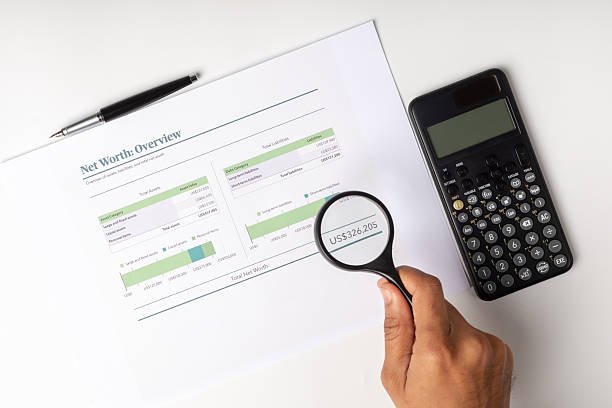
Net worth calculation forms the foundational step of any serious personal finance strategy. Understanding your true financial position gives you clarity on where you stand today and where you can go tomorrow. Without knowing this key metric, managing money feels like driving blindfolded without a dashboard. People often confuse high income with true wealth, but building a solid financial foundation relies entirely on tracking net worth accurately over time.
Financial education starts with understanding how wealth is measured globally. According to reports by Wikipedia, tracking assets and liabilities is the standard method economists use to evaluate individual prosperity. This comprehensive guide will walk you through every aspect of valuing your properties, evaluating your debts, and using the Net worth calculation tool to monitor your economic progress year after year.
Assets and Liabilities – Net worth calculation
To perform an accurate net worth calculation, you must divide your financial life into two distinct categories: what you own and what you owe. Assets represent the resources you own that hold economic value. These items can include your primary residence, investment portfolios, retirement accounts, cash savings, and valuable physical possessions like vehicles or art pieces. Liquid assets, such as cash and stocks, convert easily into currency, whereas illiquid assets, like real estate, take time to sell.
Liabilities, on the other hand, represent every single debt obligation you currently carry. Common examples include mortgage balances, student loans, credit card debt, auto loans, and personal loans. When you add up all your possessions and subtract your financial obligations, you arrive at your personal net worth figure. This equation provides an objective snapshot of your economic health, bypassing flashy lifestyles to reveal true financial reality.
Many beginners struggle to value their possessions correctly during an initial net worth calculation. Real estate should be evaluated at current market value rather than purchase price, while vehicles generally depreciate over time. Keeping a transparent record ensures your financial statements remain accurate and reliable for future planning.
Step by Step – Net worth calculation
Executing a reliable net worth calculation requires a systematic approach to gathering financial documents. Following a structured procedure eliminates guesswork and ensures you do not miss hidden debts or forgotten investment accounts. Here is a simple step-by-step process to help you get started on your wealth tracking journey:
- List all cash accounts, checking balances, and emergency savings funds.
- Calculate the current market value of all real estate, vehicles, and valuables.
- Compile retirement funds, stocks, bonds, and other investment accounts.
- Gather statements for all outstanding loans, mortgages, and credit balances.
- Subtract total liabilities from total assets to find your final number.
By breaking the process down into manageable steps, anyone can complete a thorough net worth calculation without feeling overwhelmed by complex math. Consistency is key, so make sure to repeat this evaluation at least once or twice every year to monitor your overall growth.
Net worth calculation Benchmarks
Evaluating your personal wealth against population averages provides useful context for your financial standing. Age plays a major role in how much wealth an individual accumulates. Young adults starting their careers often have a negative net worth due to student loans, while middle-aged professionals generally build significant equity through property ownership and retirement savings. A proper net worth calculation helps you see if you are keeping pace with realistic milestones.
Financial planners often use a simple formula to determine target net worth benchmarks based on age and income. Multiplying your age by your annual pre-tax income and dividing by ten gives a rough baseline for where you should aim. However, individual circumstances vary wildly depending on career paths, family responsibilities, and geographic locations with different costs of living.
Here is a comparison table outlining general wealth milestones across different life stages:
| Age Group | Typical Financial Stage | Average Wealth Goal |
|---|---|---|
| 20s | Career entry, debt accumulation | Positive to 1x annual salary |
| 40s | Peak earning, family, mortgage | 3x to 5x annual salary |
| 60s+ | Pre-retirement, asset consolidation | 10x+ annual salary |
Common Wealth Mistakes
Mistakes during a net worth calculation can severely distort your financial planning and lead to false confidence. One frequent error involves overestimating the resale value of personal belongings like clothing, electronics, or furniture. These items usually depreciate rapidly and should not be factored into serious wealth equations unless they are rare collectibles.
Another pitfall is forgetting to update your asset values regularly. Property markets fluctuate, investment portfolios grow or shrink, and debts slowly pay down over time. Failing to refresh your financial data means your net worth calculation becomes outdated within months, rendering your long-term goals less effective.
- Ignoring small recurring debts like credit card balances.
- Failing to account for future tax liabilities on retirement accounts.
- Mixing business assets with personal accounts incorrectly.
- Using speculative or emotional pricing for unique possessions.
Avoiding these common errors ensures your financial tracking remains precise. Maintaining honesty with your numbers creates a sturdy bedrock for future investment decisions and retirement planning.
Tools for Tracking
Modern technology has revolutionized the net worth calculation process by replacing paper spreadsheets with automated digital dashboards. Today, specialized financial software securely connects to your bank accounts, investment platforms, and loan providers to update your numbers in real time. This automation saves hours of manual data entry and reduces human error.
When choosing a wealth-tracking tool, security should always remain your top priority. Look for platforms that use bank-level encryption, multi-factor authentication, and strict privacy policies to protect your sensitive financial data from unauthorized access. Free applications and paid software both offer unique features depending on your preference.
Using a dedicated net worth calculation app allows you to visualize your financial trajectory through charts and graphs. Seeing your assets grow visually provides powerful psychological motivation to maintain disciplined saving and investing habits over the long haul.
Growing Your Wealth
Once you master the art of the net worth calculation, your focus should shift toward actively growing your financial assets. Wealth accumulation does not happen by accident; it requires deliberate strategies such as increasing your income, reducing unnecessary expenses, and investing surplus funds wisely in diversified portfolios.
Compound interest serves as the most powerful engine for long-term financial growth. By reinvesting dividends and capital gains, your money works for you around the clock. Over decades, even modest regular investments can snowball into substantial sums, securing your financial freedom and retirement comfort.
Consistent monitoring through a regular net worth calculation keeps you accountable to your financial targets. Celebrate small milestones along the way, whether it is paying off a student loan or reaching your first hundred thousand dollars in total investments.
Frequently Asked Questions
What is included in a net worth calculation?
A standard net worth calculation includes all liquid and illiquid assets, such as cash, real estate, and investments, minus all outstanding liabilities like loans and mortgages.
How often should I update my net worth?
Most financial experts recommend updating your personal balance sheet and checking your net worth calculation every three to six months to track progress accurately.
Can net worth be a negative number?
Yes, especially for younger individuals who carry heavy student loan debt or large mortgages before building up significant savings or property equity.